
Are Cruise Ship Water Slides and the FlowRider Safe? What Passengers Should Know
Most rides end without harm, but when one does not, the equipment, the staffing and the warnings all matter. Here is how these injuries happen and what to do next.
TL;DR:
- Most rides end without harm. But speed, impact and shallow water can cause serious injuries, which is the heart of many water slide injury cases.
- Responsibility is about more than the rider. It can depend on the equipment, the staffing, how the rules were enforced and what warnings were given.
- Warnings and waivers do not automatically end a claim. How much weight they carry depends on the facts and the law that applies.
- You can lower your risk. Follow the attendant, check the limits, wait for a clear slide and keep children supervised.
- If you are hurt, report it, photograph the area, note the attendant’s name, get care and do not sign anything you do not understand.
Most trips down a cruise ship water slide, or across the FlowRider, end with wet hair and a good story. A small number do not. Speed, impact and shallow water can cause serious injuries, and when that happens the question is not only what the rider did. It is also whether the equipment, the staffing, the rules and the warnings were what a reasonable operator would provide.
This article explains how each attraction can go wrong, which injuries passengers report, what a cruise line is expected to do and what to do if you or your child is hurt. It does not claim that any attraction is unsafe, and it does not single out any ship or cruise line.
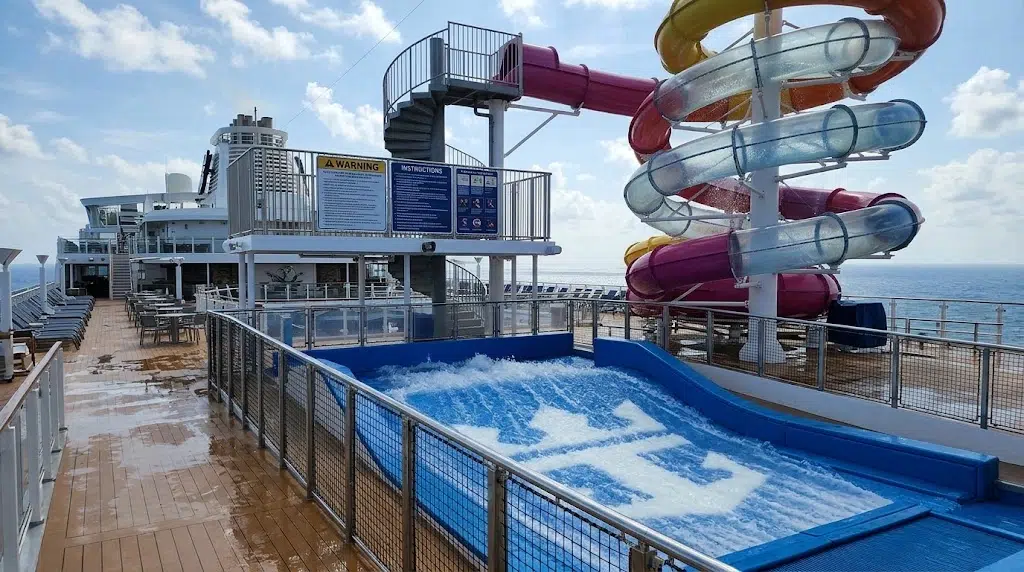
Are Cruise Ship Water Slides and the FlowRider Safe?
Many riders use cruise ship water attractions without any harm. Whether one is safe on a given day depends on three things: how it was designed and maintained, how it is run, and how the rider uses it. When an injury happens, whether the cruise line is responsible usually turns on the equipment, the staffing, how the rules were enforced and what warnings were given.
That is a question of facts, and the facts tend to be on the ship, in the maintenance records and in the memories of the people who were there. It is one more reason to act early if you are hurt.
How Water Slide and FlowRider Accidents Happen on Cruise Ships
How standard water slides can go wrong
On a standard slide, the risks tend to come from speed, tight turns, the spacing between riders and the landing pool. A rider who is sent down too soon can collide with the person ahead, and a landing area that is too shallow or too crowded can turn a routine finish into an impact.
High-speed drop slides and 3D goggles on water slides
High-speed drop slides send riders down a steep, fast descent, and the forces involved are greater than on a gentle slide. Some ships add virtual reality goggles to the ride, which is what 3D goggles on water slides are about. Goggles limit what a rider can see during a fast descent, so the instructions, the fit and the attendant’s supervision matter even more.
FlowRider surf simulator risks
The FlowRider is a stationary wave that riders try to stand on, over a hard, padded surface. Wipeouts are part of the sport, but a fall at speed can still hurt. Training, a clear process for who rides and when, and attentive staff all affect how risky it is, which is the area covered by FlowRider surf simulator accidents.
Aqua park crowding and supervision
Crowding is the main concern in a play area with several features. When many children and adults share a small space, collisions, falls and rough play can happen quickly, and aqua park injuries often involve questions about how many people were allowed in and who was watching.
Common Cruise Ship Water Slide Injuries
Water attractions tend to produce a different pattern of harm from the most common injury on a cruise ship. Passengers have reported:
- Head and neck injuries, including concussions.
- Back and spinal injuries, especially after a hard landing.
- Fractures, often to arms, wrists, legs and collarbones.
- Cuts, scrapes and friction burns from the slide surface.
There is no reliable public count that we can point to for how often these accidents happen, so this article does not offer statistics. A head or neck injury can seem minor at first and become serious later, so it is worth getting checked even if you feel fine.
This is general information. It does not say that any particular ship, cruise line or attraction is dangerous, and every case depends on its own facts.
What Cruise Lines Are Expected to Do to Keep Water Attractions Safe
Cruise lines generally owe passengers reasonable care under the circumstances. For a water attraction, that care can include the steps in the table below.
| What is expected | What it can look like in practice |
|---|---|
| Inspect and maintain the equipment | Regular checks, repairs when something wears out, and records that show it was done |
| Staff it with trained attendants | Enough people, trained for that attraction, who are watching riders and not distracted |
| Enforce height, weight and health limits | Checks at the entrance, and a consistent rule instead of one that is waived when it is busy |
| Give clear instructions and warnings | Rules that are posted where riders can see them and explained out loud, in a language riders understand |
| Stop use when conditions are unsafe | Closing a slide in bad weather, rough seas, or when equipment is not working properly |
When one of these steps is missed and someone is hurt, the case may become one of passenger accident claims on cruise ships. What matters is what was done, what should have been done and whether the gap caused the injury, and that is something investigators and lawyers look at closely.
Do Warning Signs and Waivers Stop a Cruise Ship Injury Claim?
Many attractions have a warning sign, and some ask riders to sign a waiver or accept a rule that says the ride is used at your own risk. It is natural to assume that ends any claim. It usually does not.
- What a sign or waiver may do: show that a risk was disclosed, support an argument that the rider accepted a known risk, and be raised by the cruise line as a defense.
- What it may not do: automatically excuse faulty equipment, poor maintenance or weak supervision.
Federal law also limits how far a cruise line can use a ticket to avoid responsibility for its own negligence, although how that applies can depend on the voyage and on the wording of the document. The ticket matters for another reason too. It can set short deadlines to give notice and to sue, and it can decide the court, which is why where you can sue a cruise line is worth understanding before you decide anything.
How to Stay Safer on Cruise Ship Water Slides and the FlowRider
These are practical habits, not blame. Most of them take a few seconds.
- Follow the attendant, and wait for the signal before you go.
- Check the restrictions, including height, weight and health limits, before you queue.
- Wait for a clear slide, and do not start until the rider ahead has left the landing area.
- Use the right position, feet first or as instructed, and keep your arms and legs in.
- Take off loose items, and take care with goggles and headsets.
- Keep children supervised, and keep them in the areas that are meant for their size.
- Skip it when it feels wrong. If the slide looks damaged, the pool is too crowded or the staff seem absent, you can say no.
Hurt on a cruise ship attraction?
We can look at what happened and tell you which deadlines may apply. The call is free.
What to Do If You Are Hurt on a Cruise Ship Water Slide or FlowRider
These steps protect your health and your options, and they matter most in the first 24 hours after a cruise injury.
- Report it. Tell an attendant and the guest services desk, and ask for a copy of the incident report.
- Photograph the area and the equipment. Include the slide, the landing pool, any signs and your injuries.
- Write down names. Note the attendant on duty and any witnesses, and get their contact details if you can.
- Get care. Visit the medical center and follow up with your own doctor when you are home.
- Do not sign anything you do not understand, including a form from the cruise line that releases it from claims.
- Keep your records. Save your ticket, receipts, messages and notes.
Frequently Asked Questions
Are cruise ship water slides safe?
Many riders use them without harm, but speed, tight turns and shallow landing areas can cause serious injuries when something goes wrong. How safe a slide is depends on how it was built and maintained, how it is staffed and how its rules are enforced. Follow the attendant’s instructions and the posted limits every time.
Can I make a claim after a FlowRider injury?
Possibly. A claim may depend on the condition of the equipment, the training and supervision of the staff, the instructions you were given and how the ride was run at the time. Report the injury, get medical care and keep records, then ask a lawyer to review the facts and any ticket deadlines.
Does a posted warning or a waiver stop a claim?
Not automatically. A warning sign or a signed waiver can be raised by the cruise line, but neither necessarily excuses faulty equipment or poor supervision, and how much weight they carry depends on the facts and the law that applies. Do not assume you have no claim because you signed something.
What should I do right after a water slide or FlowRider injury?
Tell an attendant and the guest services desk, get checked by the medical center, photograph the area and equipment if you can, and write down the attendant’s name and any witnesses. Do not sign anything you do not understand, and keep your receipts and ticket.
This article is for general information only and is not legal advice. Reading it does not create an attorney-client relationship. It does not say that any ship, cruise line or attraction is unsafe. Every case depends on its own facts and the terms of the passenger ticket.
Hurt on a cruise?
Most cruise tickets give you one year to file. Talk to a maritime attorney about your case today.
Call (888) 866-5303Free and confidential
Related practice areas
More from the blog
All articles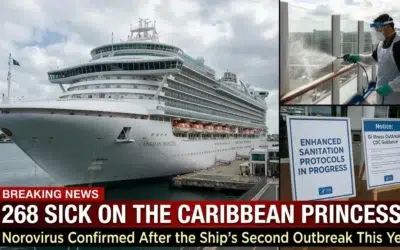
268 Sick on the Caribbean Princess: Norovirus Confirmed After the Ship’s Second Outbreak This Year
The CDC now reports 268 sick on Princess Cruises’ Caribbean Princess and names norovirus as the cause. See how the count grew and what to do if you get sick on a cruise.
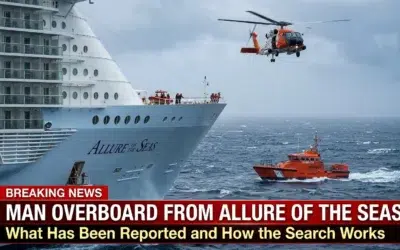
Man Overboard From Royal Caribbean’s Allure of the Seas: What Has Been Reported and How the Search Works
A man went overboard from Royal Caribbean’s Allure of the Seas off the Bahamas and the ship turned back to search. Here is what was reported and how overboard searches work.
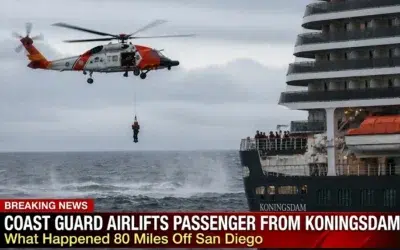
Coast Guard Airlifts Passenger From Holland America’s Koningsdam: What Happened 80 Miles Off San Diego
The Coast Guard airlifted a 74-year-old passenger from Holland America’s Koningsdam about 80 miles off San Diego. Here is what was reported and how airlifts at sea work.
0 Comments