
Tanker Hits Docked American Heritage Riverboat in New Orleans: What Passengers Need to Know
A docked riverboat, a tanker that lost control and nearly 200 people in the water show how fast a vacation can turn into a legal claim, and why the first days matter.
TL;DR:
- What happened: On Friday, November 13, 2026, a tanker struck the docked American Heritage river cruise boat at the Port of New Orleans, and the riverboat capsized.
- The outcome: Officials said everyone was accounted for, no deaths were reported and about 32 people were taken to hospital.
- The cause: The Coast Guard said the tanker appeared to lose steering, but the exact cause is not known and the NTSB is investigating.
- The legal side: The Port of New Orleans has already sued the tanker’s owner and manager and won a warrant to seize the vessel.
- For passengers: If you were aboard, passenger accident claims on cruise ships turn on early records, medical care and deadlines, so keep everything and get advice before signing anything.
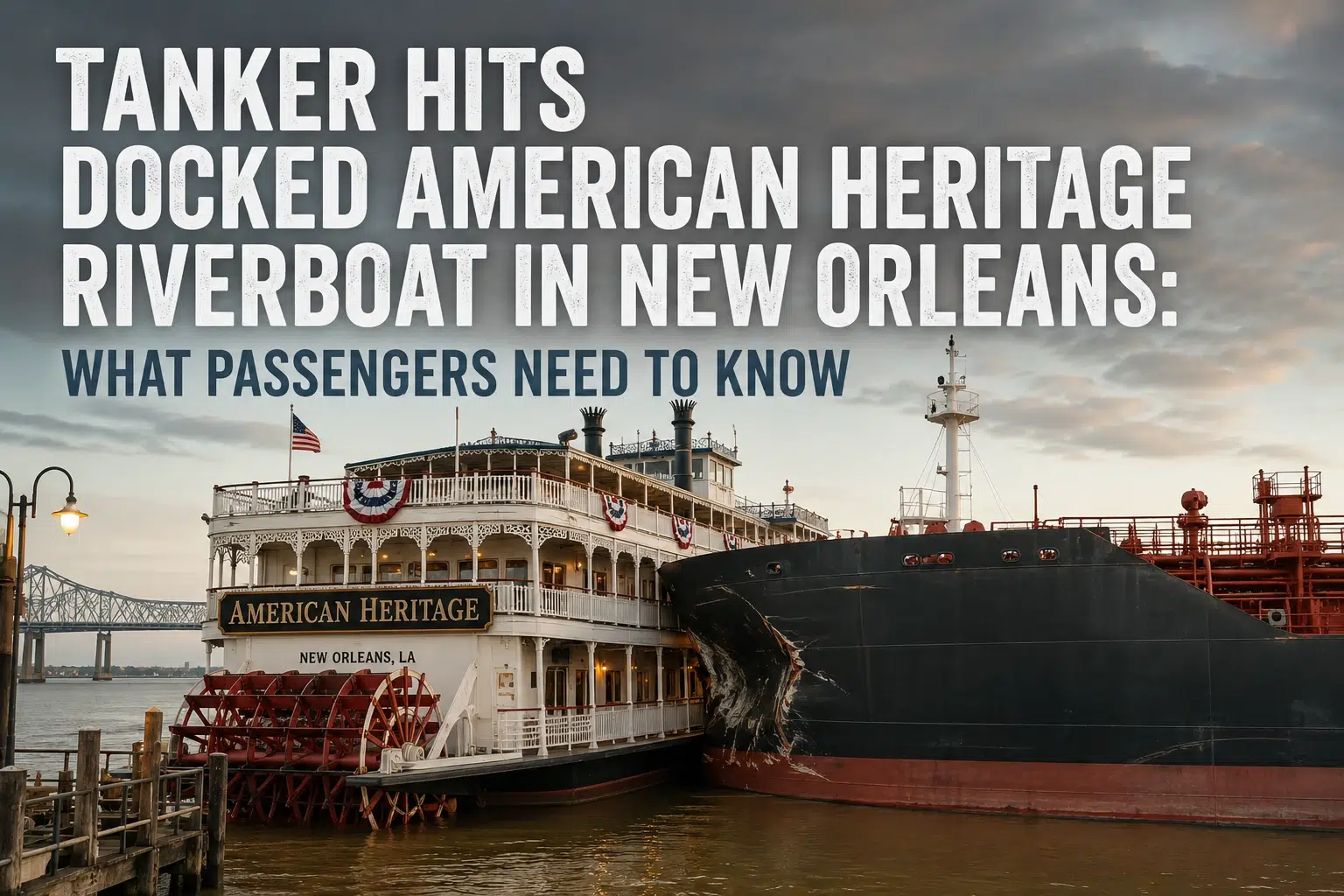
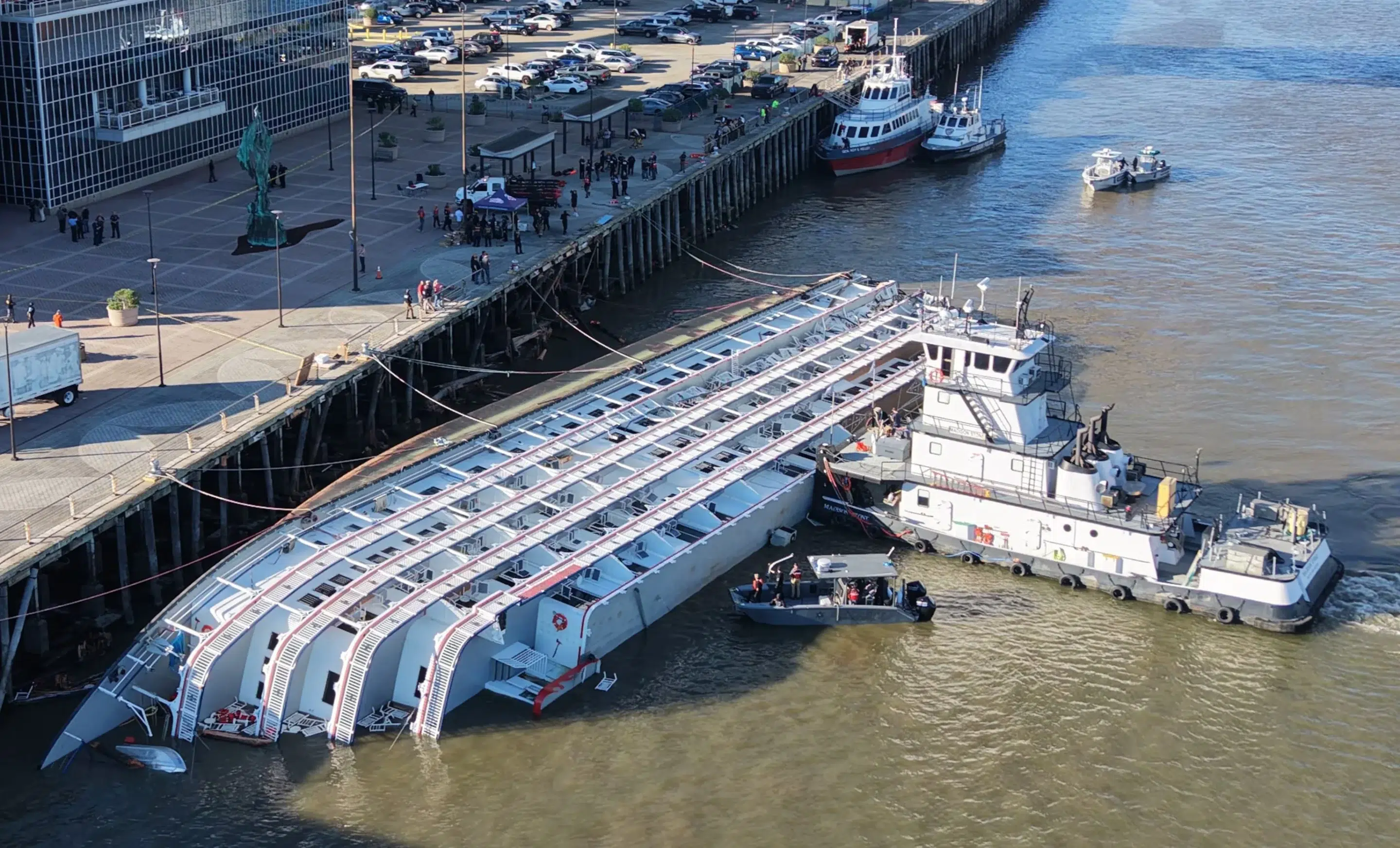
At about 12:30 p.m. on Friday, November 13, 2026, a 520-foot tanker slammed into the American Heritage, an American Cruise Lines paddlewheel riverboat tied up at the Port of New Orleans. Within minutes the riverboat, which had docked only about two hours earlier at the end of an eight-day trip, took on water and rolled onto its side. Passengers and crew went into the Mississippi or clung to the part of the boat that stayed above water.
New Orleans Mayor Helena Moreno called the outcome a “miracle on the Mississippi,” because officials said everyone was accounted for and no deaths were reported. The cause is still unknown, and nothing reported so far suggests that the riverboat’s operator or crew did anything wrong. This article covers what has been reported, who is investigating, the lawsuit that was filed the same day and what passengers can do.
What Happened in the New Orleans Riverboat Collision?
According to Al Jazeera’s report on the collision, the Atlantic Asphalt, a Marshall Islands-flagged tanker about 160 meters long, struck the American Heritage, a five-deck paddleboat built in 2015, while it was docked. The mayor said the tanker “lost control and collided into the cruise ship,” and that passengers began leaving the boat before it started to sink and then flipped over.
Fox News’s coverage of the rescue reports that harbor police were first on the scene, that firefighters lowered ladders over the dock and that nearby vessels pulled people from the water. A triage area was set up in the port’s administration building, and the river was closed to ship traffic near mile marker 96. A witness told local television it was about fifteen minutes from impact until the boat rolled over.
| Item | What has been reported |
|---|---|
| Date and time | Friday, November 13, 2026, at about 12:30 p.m., according to the Port of New Orleans |
| Place | The Mississippi River at the Port of New Orleans, near the Crescent City Connection bridge |
| Riverboat | American Heritage, an American Cruise Lines paddlewheeler built in 2015, rated for up to 150 passengers |
| Tanker | Atlantic Asphalt, an asphalt tanker about 160 meters (520 feet) long, flagged in the Marshall Islands |
| People aboard | Reports range from about 180 to 197 passengers and crew, and officials said all were accounted for |
| Injuries | About 32 people taken to hospital, with non-critical injuries at first, and no deaths reported |
| Cause | Not confirmed, though the Coast Guard said the tanker appeared to lose steering |
| Investigators | The NTSB and the Coast Guard |
| Legal action | The Port of New Orleans sued the tanker’s owner and manager in federal court the same day |
ABC News’s update on the investigation says that by Saturday afternoon all but eight of the people taken to hospital had been released, and that two of the remaining patients were in serious condition. WDSU’s live coverage reports that the state secured hotel rooms for passengers and that the Red Cross provided water, blankets and emotional support.
Video: footage related to the American Heritage collision in New Orleans. Watch it on Facebook if the player does not load.
What Is Known About the American Heritage Collision, and What Is Not
- Known: The date, the vessels, that the riverboat was docked when it was struck, that it capsized, that officials said everyone was accounted for, that about 32 people went to hospital and that the NTSB is investigating.
- Not known: Why the tanker lost control, whether the cause was a mechanical failure, a human error or both, and how the tanker came to be so close to the dock.
- Reports differ: Early reports put the number of passengers at 129, while later accounts from officials range from about 180 to 197 people aboard including crew. Reports also differ on whether the 32 hospitalized include two harbor police officers, and on the amount of fuel aboard the riverboat, which the Coast Guard has said must be removed before salvage.
- The tanker’s steering: The Coast Guard’s captain for the area said the tanker appeared to have had a loss of steering, but she added that officials do not know why. That is an early account, not a finding.
Conditions that day were clear, with light wind, and the river water was about 66 degrees, according to Fox News. People who go into water that cold can be affected quickly, which is one reason injuries and symptoms can appear later, and why anyone who was in the river should be checked by a doctor.
Collision or Allision? Why It Matters That the Riverboat Was Docked
You may see this called a collision, and you may also see the word allision. In maritime law, a collision is between two moving vessels, while an allision is when a moving vessel hits something that is not moving, such as a dock or a ship tied up at one. The Port of New Orleans has used the term allision, because the American Heritage was docked and the tanker was the vessel under way.
That difference matters for fault. When a moving vessel strikes a stationary one, maritime law has long treated the moving vessel as presumptively at fault, unless it can show that the stationary vessel was at fault or that the accident was unavoidable. That is a legal starting point and not a finding in this case. We looked at the same distinction when we covered the Mein Schiff 3 collision in Bremerhaven, which raised the same question of collision versus allision.
Who Is Investigating, and What the Data Recorder Could Show
The National Transportation Safety Board sent a team of 16 investigators, and ABC News reports that they recovered the tanker’s voyage data recorder, which is the equivalent of an aircraft’s black box. Such recorders typically log speed, heading and course and can capture bridge audio, which means they can show what the tanker’s crew said and did in the minutes before impact. The NTSB said it plans to interview crew members and asked witnesses with video to send it in.
The NTSB usually issues preliminary information within about 30 days, and a final report can take a year or more. The Coast Guard is conducting its own investigation. Neither agency assigns civil liability, but their findings often matter in later lawsuits. Passengers should keep their own photos and videos, because they may be useful evidence and the NTSB asked for them.
The Legal Fight Already Underway: A Seized Tanker and a Federal Lawsuit
Court action began the same day. According to Marine Insight’s report on the lawsuit, the Board of Commissioners of the Port of New Orleans filed a federal complaint in the Eastern District of Louisiana against the tanker, its owner and its manager, alleging negligence and seeking more than $1 million for damage to the terminal. A judge granted an emergency request for a warrant to seize the tanker, and the Port has asked that it be sold to cover its claims. The tanker’s manager said the vessel was stable at anchor and that it was cooperating with investigators.
The Port’s claim is about its own damage, not about the passengers. But it shows how these cases work: a vessel can be arrested so that there is something to pay a judgment, and other claimants, including injured people, may be able to bring their own claims against the ship and its owners. It also shows how fast the legal process moves after an accident. Passengers who are waiting to see what happens are on a clock they cannot see.
Who Could Passengers Hold Responsible?
When a docked riverboat is hit by another ship, injured passengers may have more than one possible defendant, and the rules for each are different. Nothing reported suggests that American Cruise Lines did anything wrong, and the cause is still under investigation, but it is useful to know how the claims would work.
- The riverboat’s operator: Passengers usually have a contract with the cruise line, and the ticket often sets deadlines to give notice and to sue, as well as where a case can be filed. The ticket for this cruise has not been made public, so we do not know its terms.
- The tanker’s owner and manager: Passengers do not have a ticket contract with the tanker’s owners, so claims against them are usually made under general maritime law, and ticket limits do not apply in the same way.
- Limits on liability: Vessel owners can ask a federal court to limit their liability to the value of the vessel under the Limitation of Liability Act, which generally sets a six-month window to file claims after written notice, and there are special rules for passenger vessels. A badly damaged vessel may be worth little, which makes the process complicated.
Our guides explain how the cruise ticket decides where you can sue and how long you have to sue a cruise line. Neither replaces advice on your own ticket and your own facts.
What Passengers and Families Should Do Now
If you or a family member were aboard the American Heritage, or you are dealing with a collision on any ship, these steps help protect your health and your options.
- Get a medical check: See a doctor even if your injuries seem minor, because cold water, stress and shock can cause symptoms that show up later.
- Write down what happened: Note the times, where you were, who helped you and what you were told while it is fresh.
- Save photos, video and messages: Keep everything, and send footage to the NTSB if you have it.
- Keep your documents: Gather your ticket, itinerary and any messages from the cruise line.
- List what you lost: Make a record of belongings, medications, passports and phones left behind, and keep receipts for replacements, hotels and travel.
- Be careful with releases: Do not sign a release or accept a quick payment before you understand what you are giving up.
- Tell your insurer: Check your travel and health insurance for notice requirements.
- Get advice early: Deadlines in the ticket and under maritime law can be short.
Many of these steps overlap with the first 24 hours after a cruise injury, and it helps to know who to notify and who to sue early. You can also read about cruise ship medical care after an injury, and about American Cruise Lines and passenger injury claims.
Were you on the American Heritage?
We can listen and tell you which deadlines may apply. The call is free.
Frequently Asked Questions
What happened in the New Orleans cruise ship collision?
On November 13, 2026, at about 12:30 p.m., a tanker called the Atlantic Asphalt struck the American Heritage, an American Cruise Lines riverboat docked at the Port of New Orleans. The riverboat took on water and capsized. Officials said everyone was accounted for, and about 32 people were taken to hospital.
Was anyone killed in the New Orleans riverboat collision?
No deaths were reported. Officials said everyone aboard was accounted for, and the mayor called the outcome a miracle. About 32 people were taken to hospital, and by Saturday afternoon eight remained, two of them in serious condition, according to ABC News.
What caused the tanker to hit the American Heritage?
The cause has not been determined. The Coast Guard said the tanker appeared to lose steering, but officials do not know why. The NTSB has recovered the tanker’s voyage data recorder and is investigating, and a preliminary report is usually issued within about 30 days.
Can passengers sue after a riverboat collision?
They may be able to. Injured passengers could have claims against the riverboat’s operator under their ticket contract and against the tanker’s owners under general maritime law, but deadlines, venue rules and limits on liability can apply. Each case depends on its facts, so ask a lawyer to review your ticket early.
What should I do if I was on a ship that was hit by another vessel?
Get a medical check, write down what happened, save photos and messages, keep your ticket and receipts, list what you lost and do not sign a release before you understand it. Contact your insurer and speak to a lawyer early, because deadlines can be short.
What is the difference between a collision and an allision?
A collision is between two moving vessels. An allision is when a moving vessel strikes something that is stationary, such as a dock or a ship tied up at one. The American Heritage was docked when the tanker struck it, so this is often described as an allision.
Sources: Al Jazeera, Fox News, ABC News, WDSU, Marine Insight, with additional coverage from CNN, CBS News and FOX 8, plus statements from the Coast Guard, the NTSB, the Port of New Orleans and American Cruise Lines as reported by those outlets.
This article is for general information only and is not legal advice. Reading it does not create an attorney-client relationship. It is based on public reports about an ongoing investigation, no finding has been made about the cause, and nothing in the reports suggests that the riverboat’s operator did anything wrong. Every case depends on its own facts and the terms of the passenger ticket.
Hurt on a cruise?
Most cruise tickets give you one year to file. Talk to a maritime attorney about your case today.
Call (888) 866-5303Free and confidential
Related practice areas
More from the blog
All articles
268 Sick on the Caribbean Princess: Norovirus Confirmed After the Ship’s Second Outbreak This Year
The CDC now reports 268 sick on Princess Cruises’ Caribbean Princess and names norovirus as the cause. See how the count grew and what to do if you get sick on a cruise.
Man Overboard From Royal Caribbean’s Allure of the Seas: What Has Been Reported and How the Search Works
A man went overboard from Royal Caribbean’s Allure of the Seas off the Bahamas and the ship turned back to search. Here is what was reported and how overboard searches work.
Coast Guard Airlifts Passenger From Holland America’s Koningsdam: What Happened 80 Miles Off San Diego
The Coast Guard airlifted a 74-year-old passenger from Holland America’s Koningsdam about 80 miles off San Diego. Here is what was reported and how airlifts at sea work.
0 Comments