
Do Cruise Ships Have Lifeguards? What Parents and Passengers Should Know
Many pools post a sign saying no lifeguard is on duty. Here is what supervision to expect, how a ship pool differs from one at home, and what parents can do.
TL;DR:
- It varies: Whether a pool has a lifeguard depends on the cruise line, the ship and the pool.
- Many pools have no lifeguard on duty: A posted sign often says so, and some lines staff lifeguards only at certain pools or attractions.
- Check before you swim: Read the signs, look at the depth markings and ask guest services what supervision to expect.
- Parents are the first line of defense: Stay within arm’s reach of young children, use life jackets and name one adult as the water watcher.
- A missing lifeguard does not decide everything: Who is responsible depends on the facts, which is the subject of swimming pool accident claims.
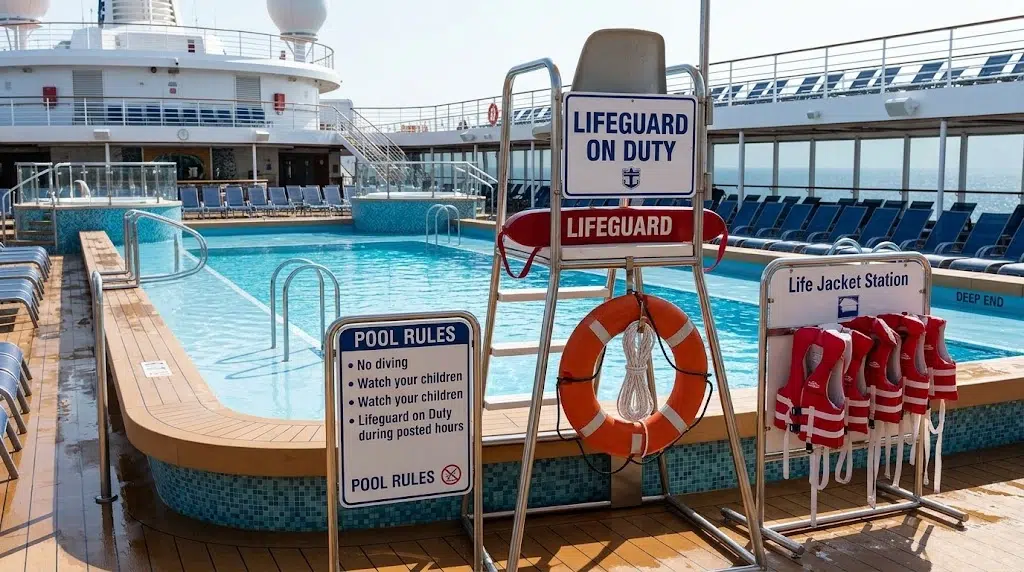
Many parents type this question into a search box before a cruise, and the honest answer is that it varies. Some pools have a lifeguard, and many do not. A common sight on the pool deck is a sign saying no lifeguard is on duty, and some cruise lines staff lifeguards only at certain pools or attractions. The way to know is to read the signs and ask guest services.
This article explains what supervision you can expect, why a ship pool is different from a pool at home, what the warning signs of trouble look like and what to do if someone is hurt. It is general safety information, and it does not describe the policy of any particular cruise line.
If you are reading this after a scare or a loss, we are sorry. This article is general information. It is not an assessment of what happened to you or your family.
Do Cruise Ships Have Lifeguards?
It depends on the cruise line, the ship and the pool. Policies differ, and they can change, so it is better to check than to assume. Look for a sign near each pool, and ask guest services which pools, if any, have a lifeguard and during which hours.
A missing lifeguard does not by itself decide whether a cruise line is responsible if something goes wrong. It is one fact among many, and the rest of this article explains the others.
What Pool Supervision Can You Expect on a Cruise Ship?
Supervision on a ship can look different from a public pool on land. Here is what you may see.
- Signs: Many pools post a notice about whether a lifeguard is on duty, along with rules about swimming, diving and age limits.
- Pool attendants or lifeguards: Some ships have attendants who keep order and hand out towels. That is not the same as a trained lifeguard whose job is to watch the water.
- Depth markings: Pools usually mark their depth along the edge, and the shallow end can be very shallow.
- Rules for children: Many ships limit young children who are not toilet trained to certain splash areas, and some require an adult in the water.
- Splash areas and attractions: Play areas and water attractions can have their own staff and their own rules, which is where aqua park injuries come in.
Each cruise line has its own policy, and ships within one line can differ. Check the cruise line’s own website and the signs on board for the pool you plan to use.
Why a Cruise Ship Pool Is Different From a Pool at Home
A pool at sea is not the same as a backyard pool, even when it looks the same. A few things change the picture.
- Moving water: The water can slosh with the motion of the ship, which can knock a child off balance or make a swimmer’s footing less certain.
- Crowds: On sea days, pools can be full, and it is hard to pick out one child among many.
- Wet decks: Slippery surfaces around the pool raise the risk of falls, especially for children who run.
- Shallow ends: A shallow pool can be dangerous for a dive.
- Hot tubs: Warm water and crowds call for extra care, especially with young children.
- Night swimming: Some pools stay open late, when fewer staff are around and visibility is lower.
Drowning Risks and Warning Signs Around Cruise Ship Pools
This section is general safety information. Drowning is often quiet. It can look very different from the splashing and shouting people expect, and a person in trouble may be unable to call out. A child can slip under the water in a short time, even in a crowded pool.
Signs that someone may be in trouble include:
- Head low in the water: The mouth may be at the water level, with the head tilted back.
- Little or no noise: The person may not call for help or wave.
- Upright and not moving forward: The body may be vertical, with the arms pressing down on the water.
- A glassy or empty look: The eyes may not focus.
Shallow-water dives are a separate risk. Hitting the bottom can cause head and neck injuries, which is why diving into a shallow pool is best avoided entirely. If you have any doubt about a person in the water, act on it right away.
Who Is Responsible for Safety at a Cruise Ship Pool?
The cruise line controls the pool. It sets the rules, decides the staffing, posts the signs and maintains the water, the deck and the equipment. Parents are still expected to supervise their children. Both of these things are true at once, and neither one cancels out the other.
A sign that says no lifeguard is on duty does something. It tells swimmers that no one is watching the water for them, and it can raise the importance of a parent’s supervision. What it may not do is automatically excuse a poorly maintained pool, a hazard that was not fixed or missing safeguards that a reasonable operator would provide. How much weight a sign carries depends on the facts and the law that applies.
When a child is hurt, questions about supervision can come up, and that is not about blame. It is part of working out what happened. If something has happened, cruise ship drowning accident claims and passenger accident claims on cruise ships look at what the cruise line did, what it should have done and whether the gap mattered.
Pool Safety Tips for Parents on a Cruise
These habits are simple, and they help in any pool.
- Stay within arm’s reach: Keep young children close enough to touch at all times in or near the water.
- Name one water watcher: Choose one adult whose only job is to watch the water, with no phone, no book and no drink in hand, and take turns regularly.
- Use life jackets: A properly fitted life jacket is a good precaution for young children and weak swimmers, and inflatable arm bands are not a substitute.
- Check the rules: Read the signs about age limits, depth and diving before anyone gets in.
- Avoid the crowds when you can: Quieter times make it easier to keep track of every child.
- Know the shallow end: Tell children not to dive and to walk, not run, on a wet deck.
- Know where the exits are: Learn where the nearest staff, life rings and phone are before you need them.
What to Do If Someone Is Hurt or in Trouble in the Water
Act first and sort out the details later. In order:
- Call for help at once: Shout for the crew and anyone nearby, and use a ship phone or emergency number if one is close.
- Reach or throw, do not jump in if you can avoid it: Use a life ring, a pool pole or anything that floats, so that a second person does not end up in trouble.
- Get the person out of the water: Follow the crew’s instructions and start first aid if you are trained.
- Get to the medical center: Even if the person seems fine afterward, they should be checked, and what to expect is covered under cruise ship medical care.
- Report it: Tell guest services or security, and ask for a copy of the incident report.
- Photograph and write down: Take pictures of the pool, signs and area if you can, and note the time, the location and any witnesses.
- Keep your records: Save your ticket, receipts and messages, as described in the first 24 hours after a cruise injury.
Water attractions have their own rules and risks, which are covered in water slide and FlowRider injuries.
Have questions after an incident at a cruise ship pool?
We can listen and tell you which deadlines may apply. The call is free and confidential.
Frequently Asked Questions
Are there lifeguards on cruise ships?
It varies by cruise line, ship and pool. Many pools post a sign saying no lifeguard is on duty, and some lines staff lifeguards at certain pools or attractions only. Check the signs on the pool deck and ask guest services, and do not assume a lifeguard is watching.
Who is responsible if a child is hurt in a cruise ship pool?
It depends on the facts. The cruise line controls the pool, its rules, its staffing, its signs and its maintenance, and parents are still expected to supervise their children. A missing lifeguard does not by itself decide whether the cruise line is responsible, and a sign does not automatically end a claim.
What should I do if I see someone struggling in the water?
Call for help at once and alert the crew, then reach or throw something that floats instead of jumping in if you can. Drowning can be quiet, so act on any doubt. Once the person is out of the water, get them to the medical center right away.
Do children need life jackets in cruise ship pools?
Rules differ by cruise line and pool, so check the signs and ask guest services. For young children and weak swimmers, a properly fitted life jacket is a good precaution, and inflatable arm bands are not a substitute for an adult within arm’s reach.
This article is for general information only and is not legal advice, medical advice or a safety guarantee. Reading it does not create an attorney-client relationship. It does not describe the policy of any ship or cruise line, which can differ and change. Every case depends on its own facts and the terms of the passenger ticket.
Hurt on a cruise?
Most cruise tickets give you one year to file. Talk to a maritime attorney about your case today.
Call (888) 866-5303Free and confidential
Related practice areas
More from the blog
All articles
268 Sick on the Caribbean Princess: Norovirus Confirmed After the Ship’s Second Outbreak This Year
The CDC now reports 268 sick on Princess Cruises’ Caribbean Princess and names norovirus as the cause. See how the count grew and what to do if you get sick on a cruise.
Man Overboard From Royal Caribbean’s Allure of the Seas: What Has Been Reported and How the Search Works
A man went overboard from Royal Caribbean’s Allure of the Seas off the Bahamas and the ship turned back to search. Here is what was reported and how overboard searches work.
Coast Guard Airlifts Passenger From Holland America’s Koningsdam: What Happened 80 Miles Off San Diego
The Coast Guard airlifted a 74-year-old passenger from Holland America’s Koningsdam about 80 miles off San Diego. Here is what was reported and how airlifts at sea work.
0 Comments